Self-harm is a very delicate symptom. It needs to be handled with care, compassion, and without judgment. When I see self-harm listed in a referral, I pay close attention to how I present myself. I use a calm and gentle voice. I maintain kind eye contact, and my body language shows that I genuinely care. When I approach the conversation with empathy and curiosity, most clients feel safe enough to open up about their self-harming behaviors.
First, I ask whether they understand the difference between self-harm and suicidal ideation.
Then, I gather a detailed history. Some questions I ask include:
Instead of asking why someone self-harms, I ask how self-harm helped them during difficult situations. This small change often makes clients feel less judged. As a result, they are usually more willing to share their experiences.
I usually ask clients to make a list of people who care about them. Some clients mention friends or family. Others say that nobody cares about them. When that happens, I gently tease them by saying they forgot two people who are already in the room. First, I tell them that I care. I chose this profession because I want to help people and show compassion to those who come to my office. Then, I tell them that the second person is themselves.
This often leads to a conversation about self-love. We discuss how society, culture, and even families rarely teach us how to love ourselves. Instead, many people grow up without learning healthy ways to care for themselves during emotional pain. As a result, some people turn to self-harm instead of self-compassion when they feel overwhelmed.
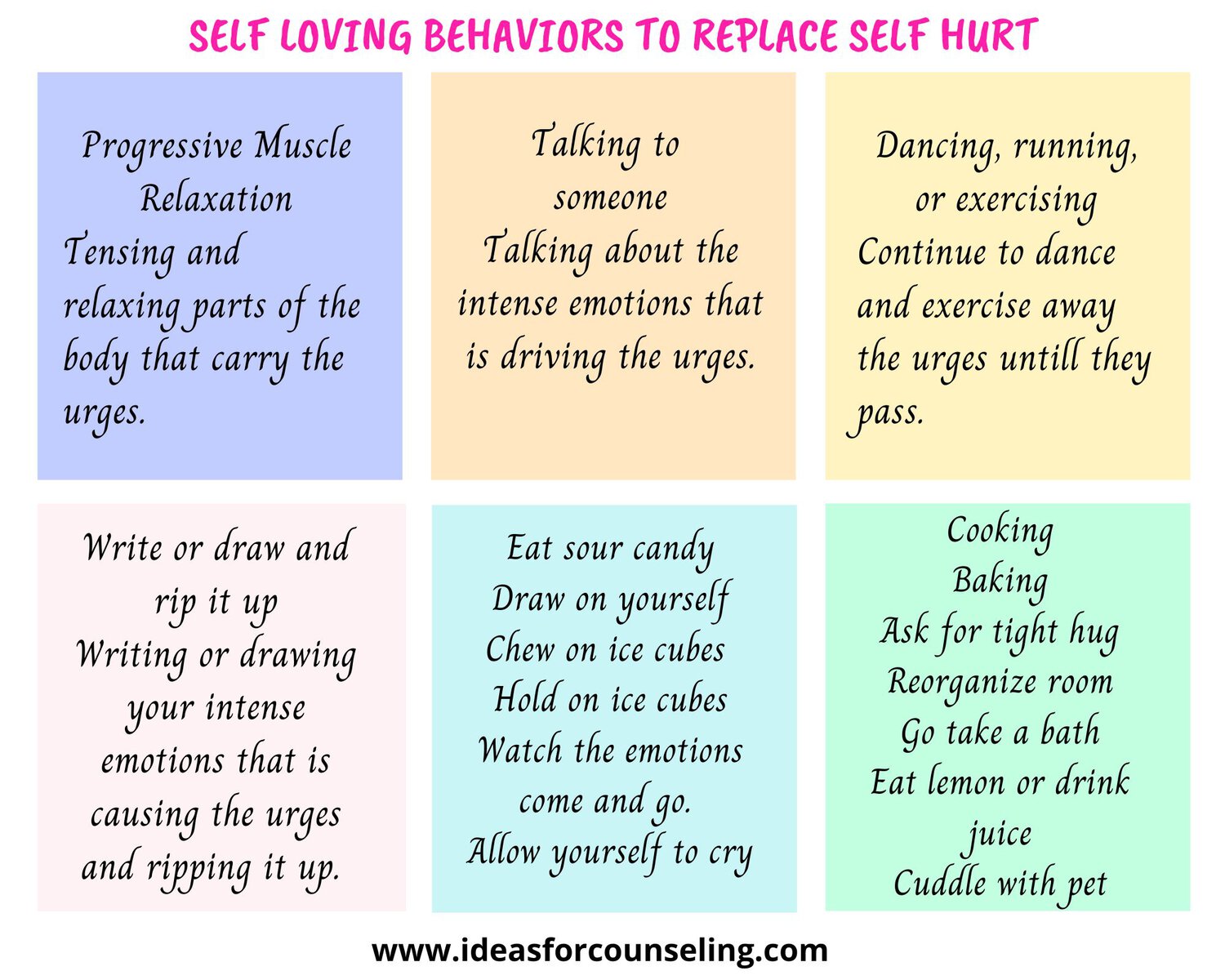
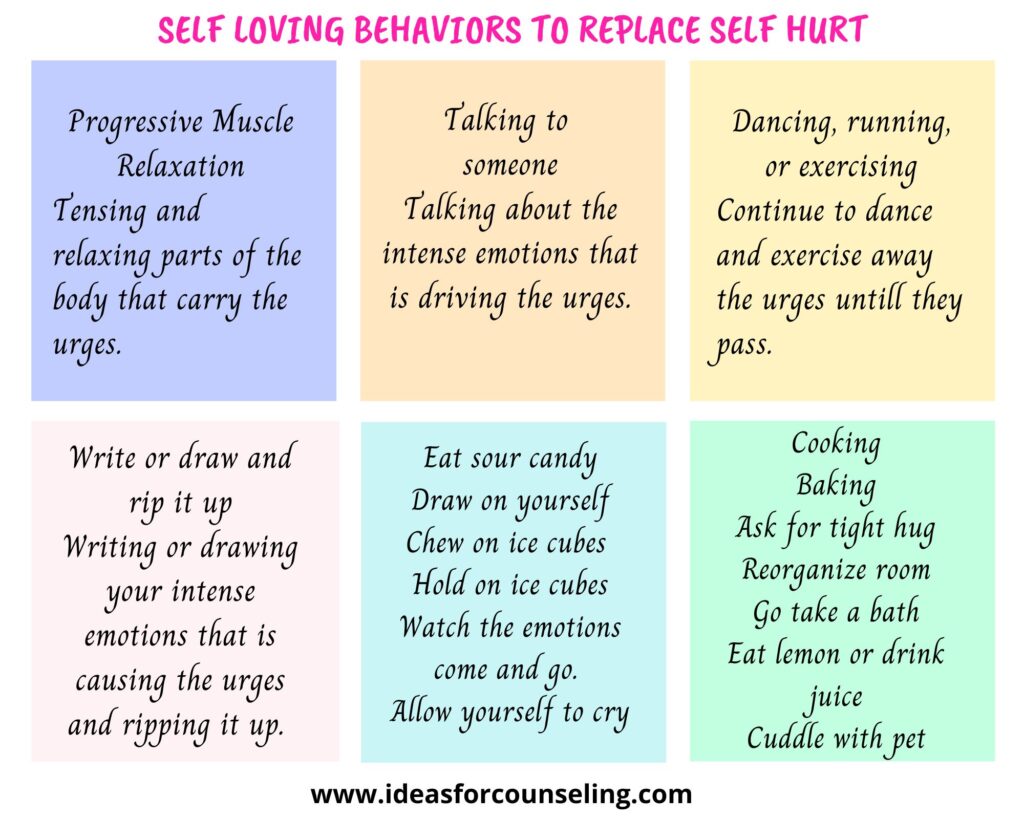
If clients are open to learning new skills, we work together to create a personalized self-love plan. We identify healthy behaviors they can use whenever they notice the urge to self-harm. The goal is not just to stop the behavior, but to replace it with actions that provide comfort, care, and emotional support.