Cognitive Behavioral Therapy (CBT)
Understanding the Cognitive Behavioral Therapy CBT Model
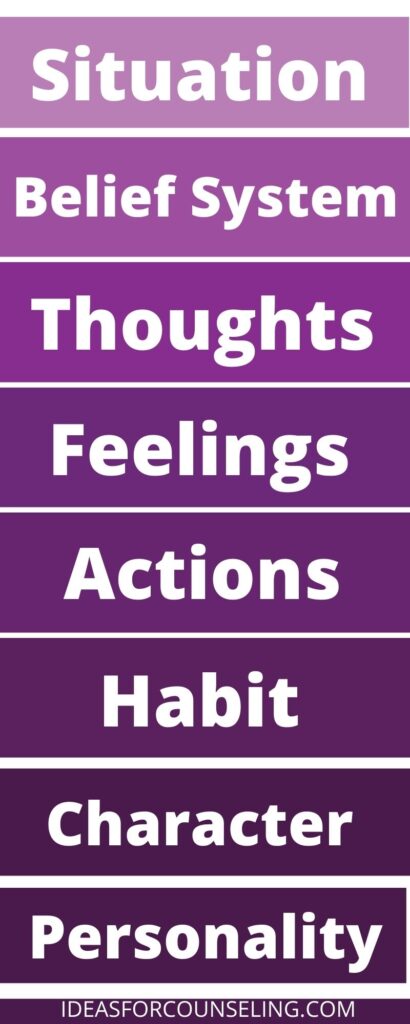
I use the PDF below to learn what clients already know about CBT. This gives me a starting point before explaining how thoughts, feelings, and behaviors work together.
Next, I share examples that show how these areas influence each other. I also explain that repeated behaviors become habits. Over time, those habits shape our character and personality.

Exploring the Belief System
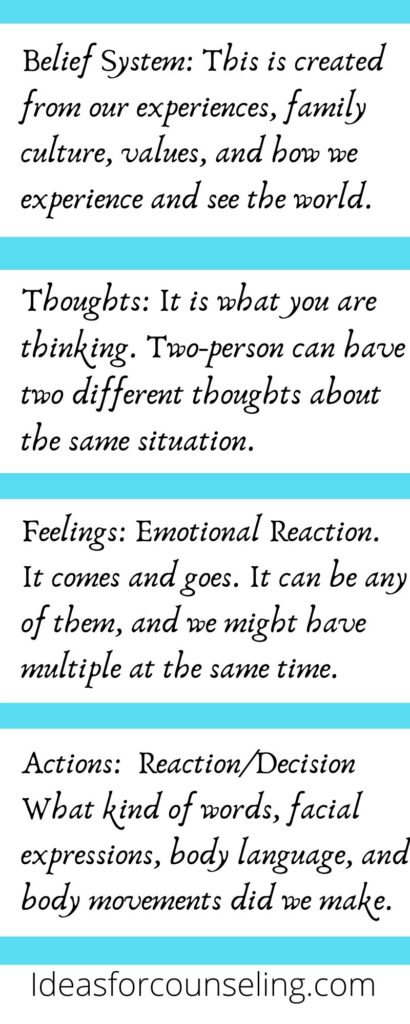
I often combine Cognitive Behavioral Therapy (CBT) with another activity because it provides valuable insight into a client’s belief system.
Specifically, I explore whether current beliefs connect to past memories or life experiences identified during the biopsychosocial timeline activity. You can access that activity below.
Biopsychosocial assessment
Exploring Core Beliefs
I also use another activity to identify triggers and explore what clients are trying to control. As a result, we can better understand the core beliefs driving their reactions.
https://ideasforcounseling.com/6th-session-emotion-regulation-triggers-and-locus-of-control/
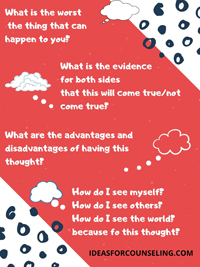
Alternatively, you can use the questions below to explore clients’ thoughts in greater depth.
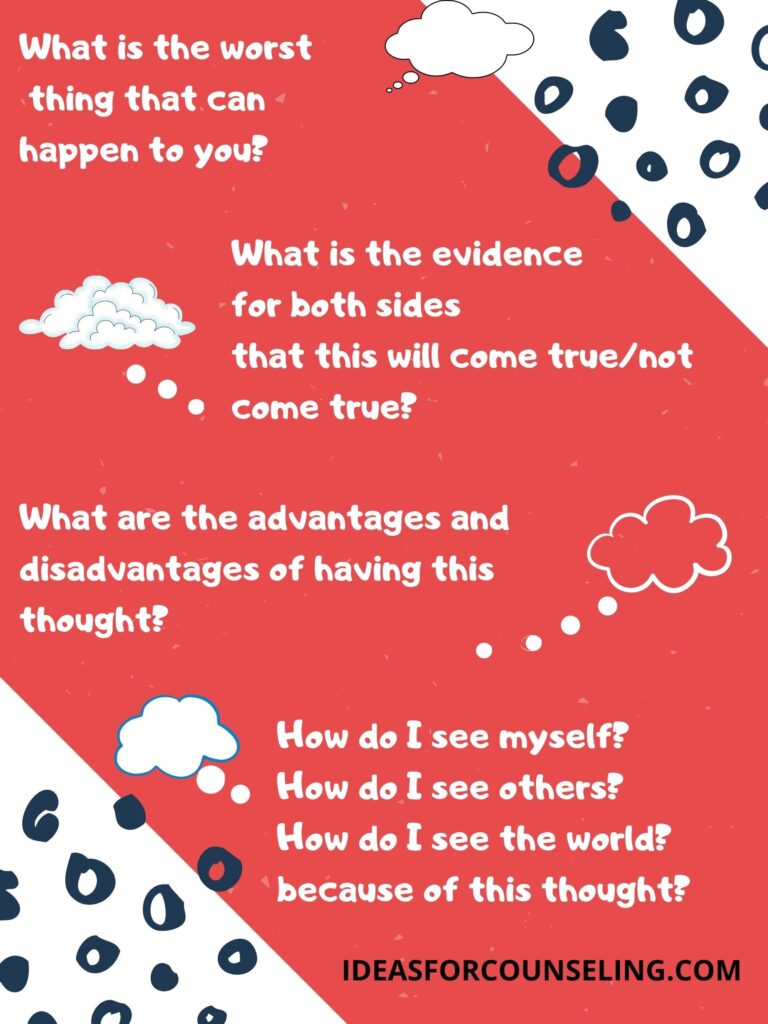
Thoughts
Once clients identify the thoughts or beliefs connected to their reactions, I introduce cognitive distortions and cognitive restructuring. These activities help clients recognize unhelpful thinking patterns and replace them with more balanced thoughts.
Cognitive Distortions and Restructuring
Feelings
After clients identify the emotions linked to their thoughts and beliefs, we focus on emotional awareness and emotion regulation.
First, we identify and label emotions. Then, we practice expressing feelings in healthy ways while exploring their purpose. In addition, we work on improving emotional awareness and building emotion regulation skills.
We also rate the intensity of emotions and increase awareness of physical sensations in the body. You can find these activities in the links below.
https://ideasforcounseling.com/4th-session-identification-of-feelings/
https://ideasforcounseling.com/5th-session-intensity-of-feelings-and-physical-symptoms-of-feelings/
Helpful Cognitive Behavioral Therapy CBT Resources
The websites below offer excellent CBT resources for therapists.
- Therapist Aid provides a large collection of CBT worksheets and handouts. https://www.therapistaid.com/therapy-worksheets/cbt/none?page=3
- Think CBT offers more than 50 CBT worksheets and resources. https://thinkcbt.com/think-cbt-worksheets
- Social Workers Toolbox includes free CBT workbooks and printable resources for children. https://www.socialworkerstoolbox.com/cbt-worksheets-for-children-free-printable-resources-for-therapists/


