COPING SKILLS
Starting With Existing Coping Skills
When exploring coping skills, I usually start by asking what they already use. This helps clients recognize their existing strengths. It also shows how small actions can create meaningful changes. For example, one coping skill they choose may help them feel better physically. It may also improve their relationship with themselves. Additionally, healthy coping skills can help manage difficult emotions, reduce distress, and build healthier responses to challenges.

Website on coping skills
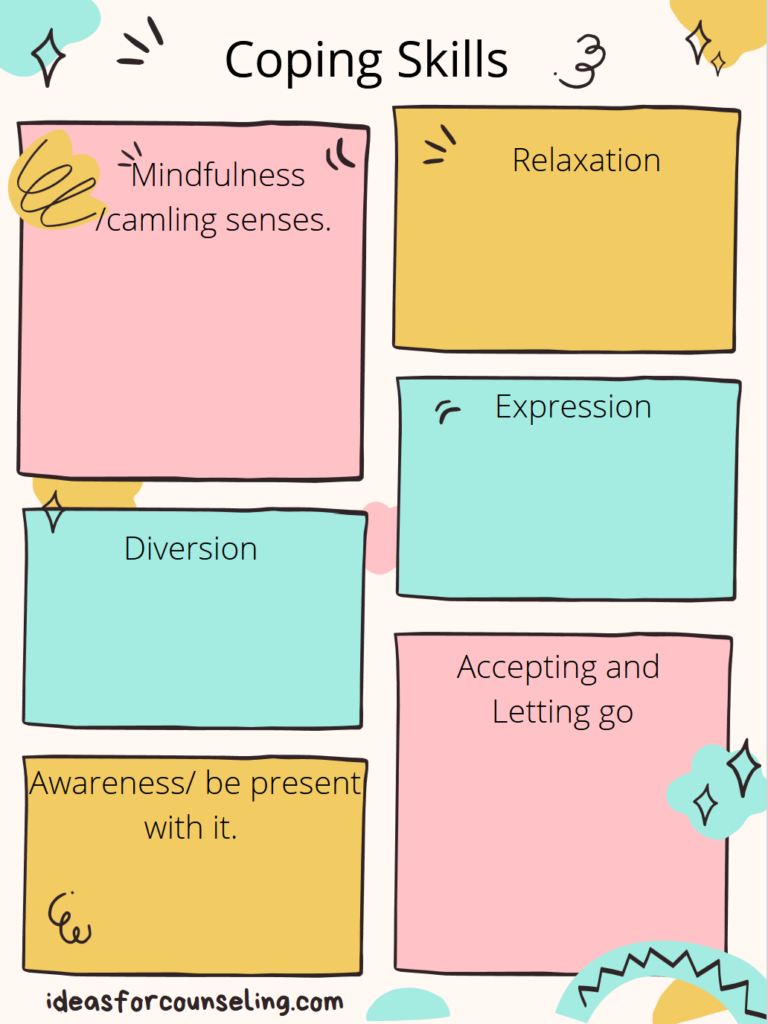
I really enjoy using resources from Youth First Inc. and Indigo Daya. These resources introduce many different coping skill concepts. They help clients explore what works best for them.
Some examples include:
- Self-soothing
- Emotional awareness
- Emotional release
- Grounding
- Mindfulness
- Distraction
- Building a support system
- Challenging thoughts
- Accessing your higher self
- Self-love
- Opposite action
Overall, these resources cover a wide range of coping strategies. I often use both resources with my clients.
Coping Skills
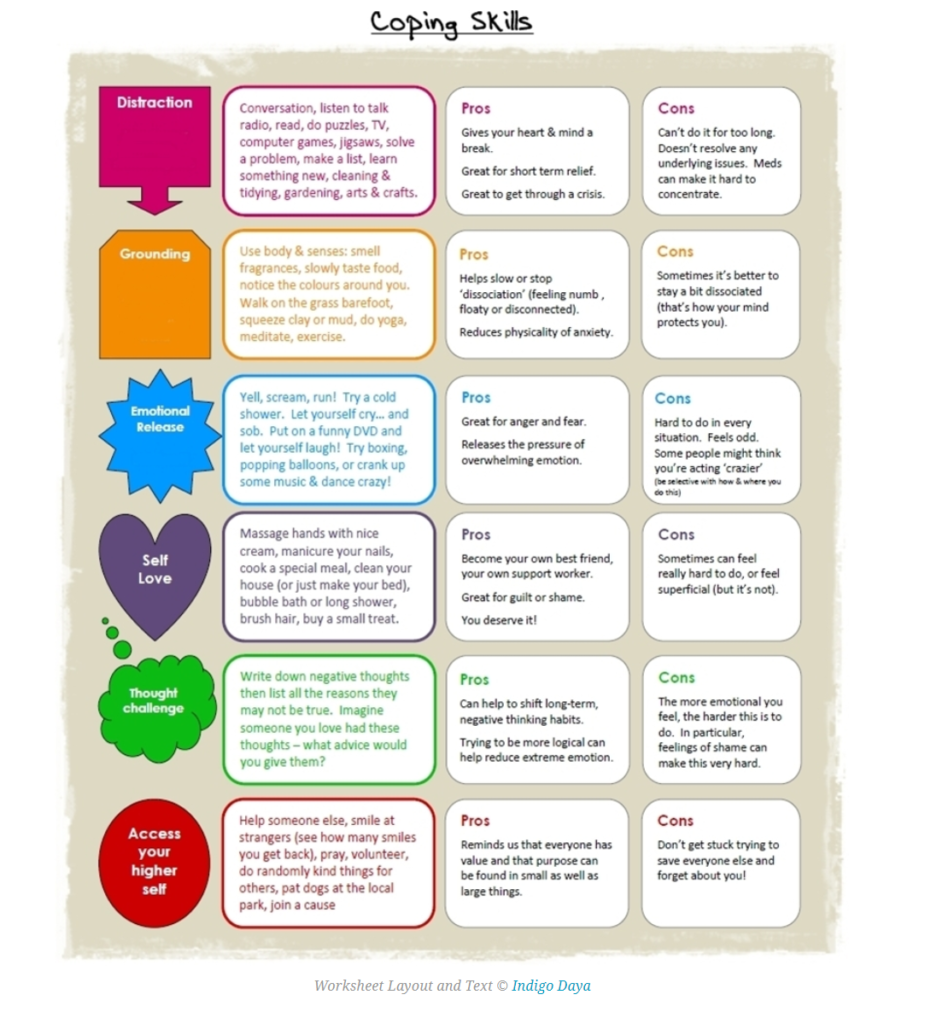
http://www.indigodaya.com/wpcf7_captcha/2019/04/Coping-skills-flyer-v5_Indigo-Daya.pdf
COPING SKILLS WORKSHEET
Creating a Coping Skills Worksheet
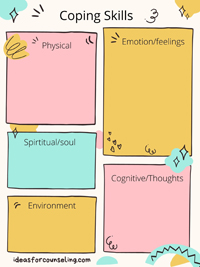
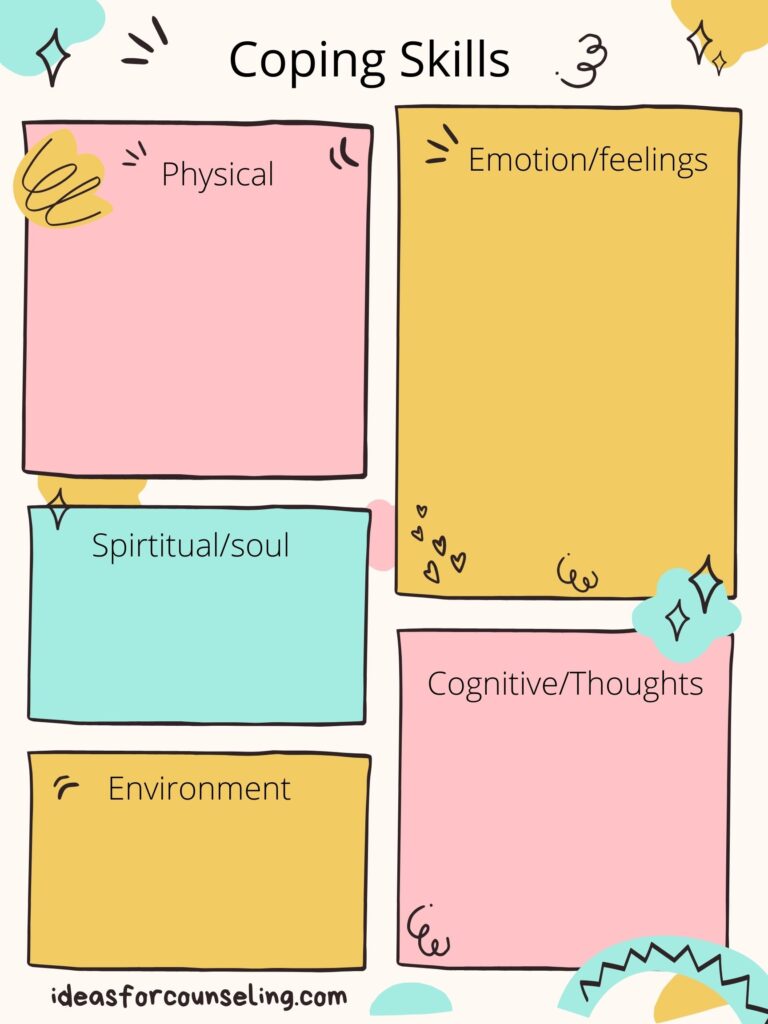
After clients understand how coping skills support their soul, heart, mind, and body, they can create their own worksheet. This allows them to personalize their coping strategies. They can include skills that feel meaningful and helpful. Furthermore, they can continue adding new strategies as they learn more.
You can also explore my other posts on emotion regulation, mindfulness, and cognitive distortions. These topics can help clients build a stronger coping skills list.
Emotion Regulation – Ideas For Counseling
Emotion Regulation 2 – Ideas For Counseling
Mindfulness
Cognitive Distortion CBT – Ideas For Counseling


