
Kids in Adoption, Foster Care, or Kinship Care
If you work with children who are adopted, in the process of adoption, in foster care, or being raised by relatives through kinship care, you have the opportunity to become one of the most important supportive adults in their lives. These children often have unique life experiences that can affect their emotional development, behavior, relationships, and sense of safety. Every child has a different story, and there are many layers and complexities that should be considered when providing treatment. This guide is designed to help you better understand these children and provide practical tools that support trauma-informed, compassionate care.
Assess, Connect, and Support
Understanding a child’s history allows you to provide more holistic and individualized treatment. While adoptive, foster, or kinship caregivers may not always know every detail of the child’s early life, gathering as much information as possible can help you understand the child’s behaviors, strengths, and needs.
Consider exploring the following questions:
1. What was the pregnancy and early prenatal history?
Were there concerns related to:
-
- Alcohol or substance use during pregnancy?
-
- Domestic violence?
-
- Housing instability or homelessness?
-
- Significant stress or trauma?
-
- Medical complications or genetic concerns?
-
- Prenatal or early childhood neglect or abuse?
2. What led to the child entering foster care, adoption, or kinship care?
When appropriate, try to understand:
-
- What circumstances led to the biological parents losing or relinquishing parental rights?
-
- Does the child know their life story?
-
- Is ongoing contact with biological family possible or appropriate?
-
- As the child grows older, what are the family’s plans if the child wishes to reconnect with biological relatives?
3. What has the child’s caregiving journey looked like?
Ask about:
-
- How old was the child when they entered their current home?
-
- Were there multiple foster homes or caregiver transitions?
-
- How many significant attachment disruptions has the child experienced?
-
- Have they experienced failed reunifications or disrupted placements?
Each transition can affect a child’s ability to trust adults and form secure relationships.
4. Why did the caregivers choose to welcome this child into their family?
Understanding the caregivers’ motivation can be incredibly valuable throughout treatment.
Their answer often reflects the hopes, values, and commitment that led them to become foster, adoptive, or kinship caregivers. During challenging moments, gently helping caregivers reconnect with their original purpose can encourage patience, compassion, and trauma-informed parenting rather than reacting solely to difficult behaviors.
Remember, children heal best in relationships where they feel safe, accepted, and understood. Supporting caregivers in maintaining that perspective is one of the most powerful interventions you can provide.

Helping Caregivers Make Meaningful Parenting Changes
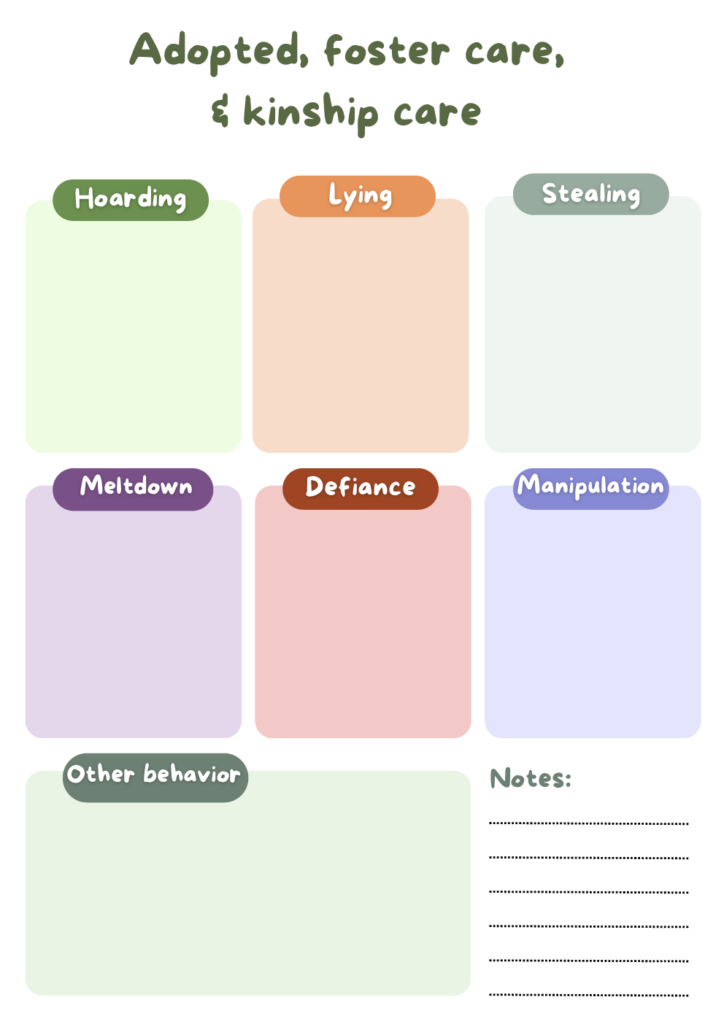
Behavior Tracker for Children in Foster Care, Adoption, or Kinship Care
Children who have experienced trauma, foster care, adoption, or kinship care often communicate their unmet needs through their behavior. While every child’s story is unique, many challenging behaviors are common responses to difficult life experiences—not simply “bad behavior.” If trauma is involved, these situations can be incredibly complex. Lasting change rarely happens through punishment alone. Instead, it begins when caregivers are able to respond with compassion, curiosity, and a nonjudgmental mindset.
One helpful tool is a behavior tracker that encourages both the caregiver and child to reflect on what happened, rather than simply reacting to the behavior.
Use this tracker to explore:
-
- What happened before the behavior?
-
- How did the caregiver respond?
-
- What might the child have been feeling or needing?
-
- Why might the child have chosen this behavior?
-
- What healthier coping skills or responses could be practiced next time?
The goal isn’t perfection—it’s understanding patterns, strengthening relationships, and helping children develop healthier ways to express themselves.
Seeing the behavior through the lens of Trauma (feeling scared)
I really recommend the book “Beyond consequences, logic, and control by Heather T. Frobes and B. Byran Post. I think I knew that I had to see more than the behaviors of kids who were in adopted and foster care, however it totally clicked once I read this book.
The book tells us to face our own fear of the children’s behavior and how to address our own fear and the children’s fear. It talks about how we need to validate that the children tend to lie or become defiant because they are fearful of something happening to them if they are compliant and take responsibility for their action. It also teaches us to validate that kids might steal, hoard or become aggressive when they are stressed and validating can help them to trust the parents and come for help than rely on those behaviors.
|
Behaviors |
Parent’s fear from past |
Parent’s fear of future |
How to address child’s fear |
|
lie |
Pain from the past- when we are lied upon. |
Future success and relationships
|
Sometimes when we get scared, we lie. Is there anything that you think is going to happen if you tell me the truth. |
|
Steal |
Pain from the past reexperiences of others judging the parent for the child stealing. |
Future success and relationships
|
Sometimes when we feel sad or stressed, we tend to take things that might make us feel good. |
|
Hoarding or gorging good |
Pain of feeling that we are not appreciated for everything we have done (food we made, groceries we buy, all the hard work). |
Worries about their health and safety. |
Sometimes when we are bored or stressed out, we tend to go for sweet food which helps us calm down. |
|
Aggressive |
Pain of feelings of being hurt physically mentally and being disrespected. |
Worries that someone might get hurt. |
I notice that you are really scared right now. If you want to talk what’s making you scared, I am here. |
|
Defiance |
Pain of feeling powerless, disrespected, not a good enough parent. |
Future success and relationships
|
I notice that you are avoiding this, what are you worried is going to happen if you did what I tell you to do. |
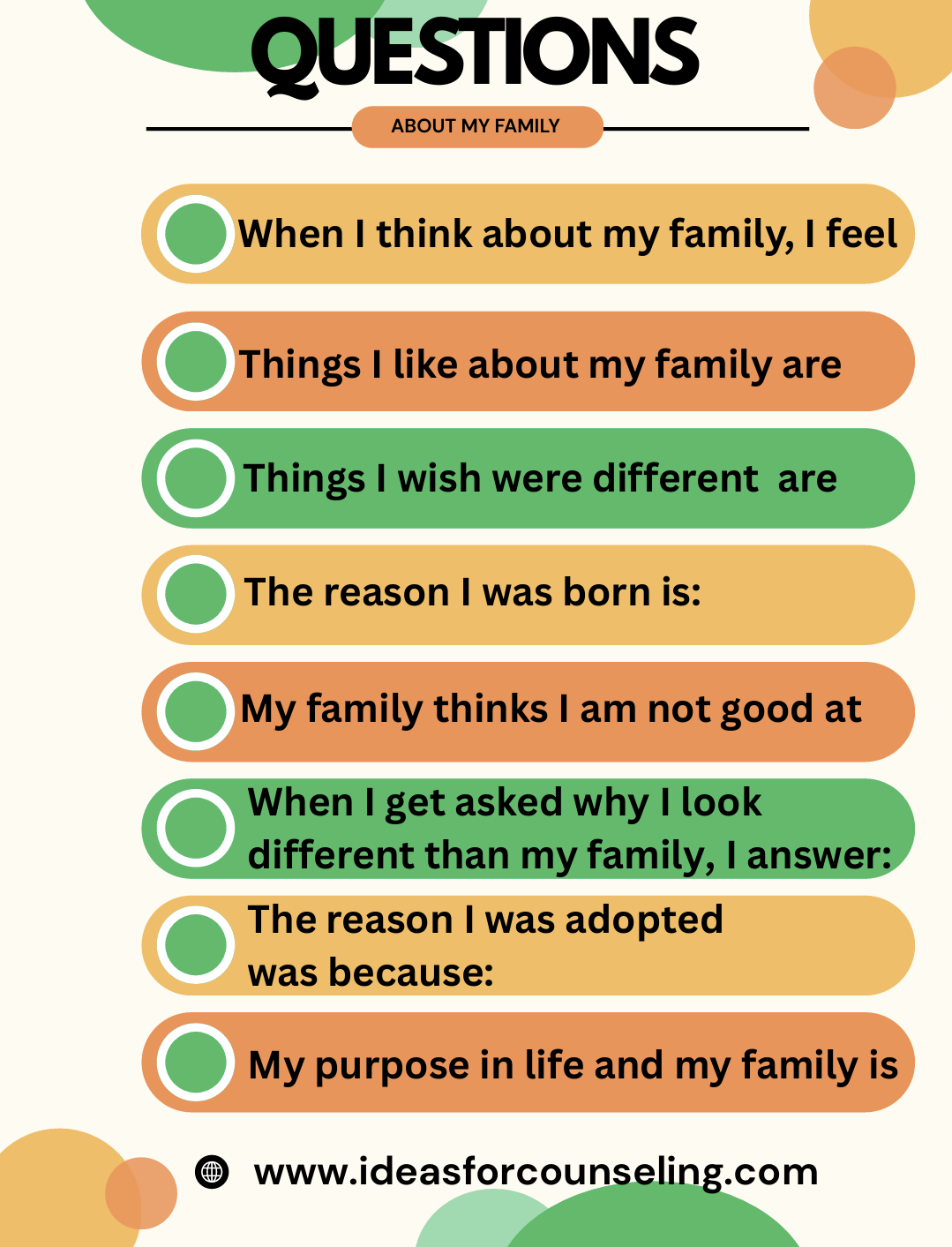
Questions to improve family communication
I also like to have family sessions and ask these questions to both the parent and child to be open with each other and communicate about adoption and how it impacts them and their family. These questions are very powerful to allow the child to be able to express their opinions and also feel heard and seen by their caregivers.
Good luck with this journey. It can be challenging at times when these caregivers who are probably burn out themselves come to you for quick answers, and there is not any quick and easy fix to it. However, I hope you keep on trusting yourself and continue to give your best to these children who need a long lasting “if possible” supportive non judgmental person.


