Safety Check for Suicidal or Homicidal Ideation
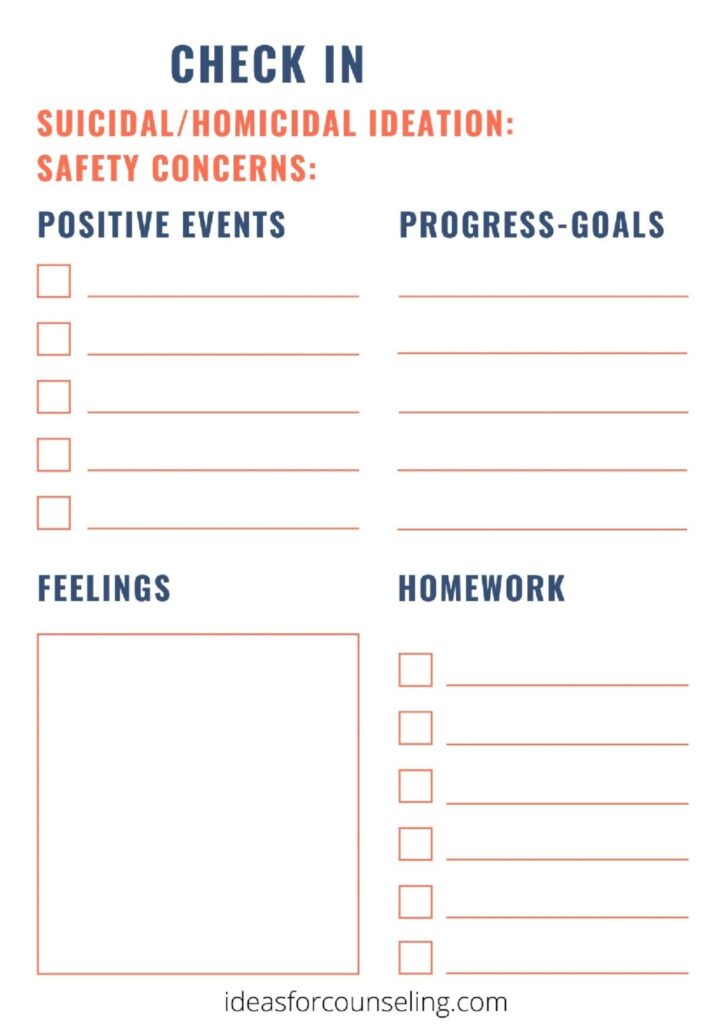
I complete a safety check for suicidal and homicidal ideation during every session. If a client reports current suicidal thoughts, I complete a risk assessment and implement appropriate safety measures. If they experienced suicidal thoughts since the last session, we explore what happened together. We discuss their triggers, coping skills, safety plan, and support system. This conversation helps identify what worked and what may need to change. Clients can also take these resources home for continued support.
To learn more about identifying triggers, building coping skills, and strengthening a support system, explore the resources below.
https://ideasforcounseling.com/locus-of-control/
https://ideasforcounseling.com/coping-skills-mental-health-anxiety/
https://ideasforcounseling.com/rapport-building-strengths-and-support-system/
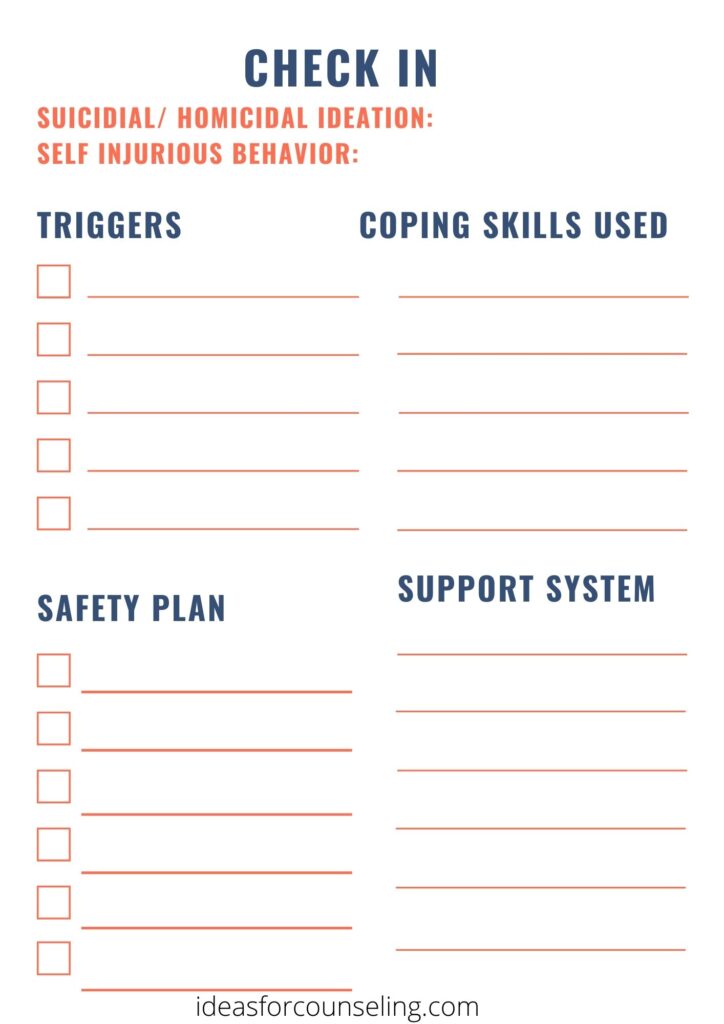

Daily Check-In
Positive Moments
Ask clients to share something positive that happened since the last session. This reminds them that life includes positive experiences, not just struggles. Many clients focus only on negative events, which can increase hopelessness and suicidal thoughts.
Progress Toward Goals
Ask clients how they think they did with their treatment goals since the last session. Explore what helped them succeed and what got in the way. As clients make progress toward their goals, their suicidal thoughts often decrease.
Feelings
With younger children, ask them to draw a strong feeling they experienced during the week. Older children can describe their feelings or discuss an event that triggered intense emotions or suicidal thoughts. Use these conversations to explore triggers, emotions, and what they can control. You can find activities on these topics through the Locus of Control resource.
Client’s Priorities
Start each session by asking, “What would you like to talk about today?” This helps clients feel heard and gives you time to address their biggest concerns. It also reduces the chance of important topics coming up at the end of the session.
Homework
End each session by having clients write down what they learned and their homework. Encourage them to practice these skills between sessions so they can apply them in everyday life.
Safety Plan for suicidal / homicidal ideation
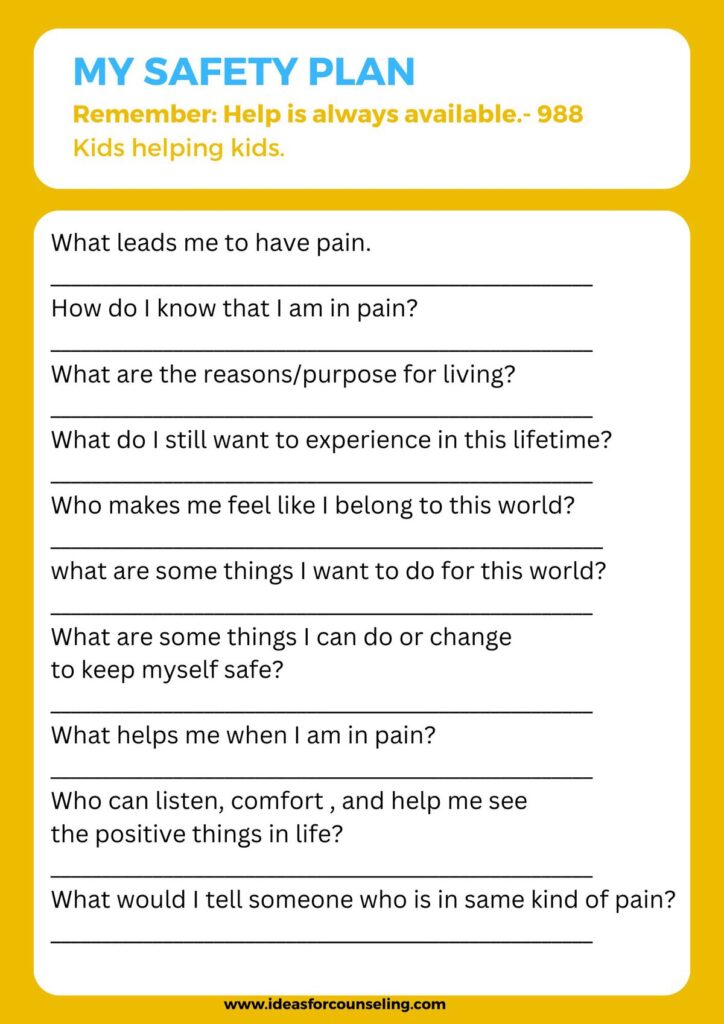
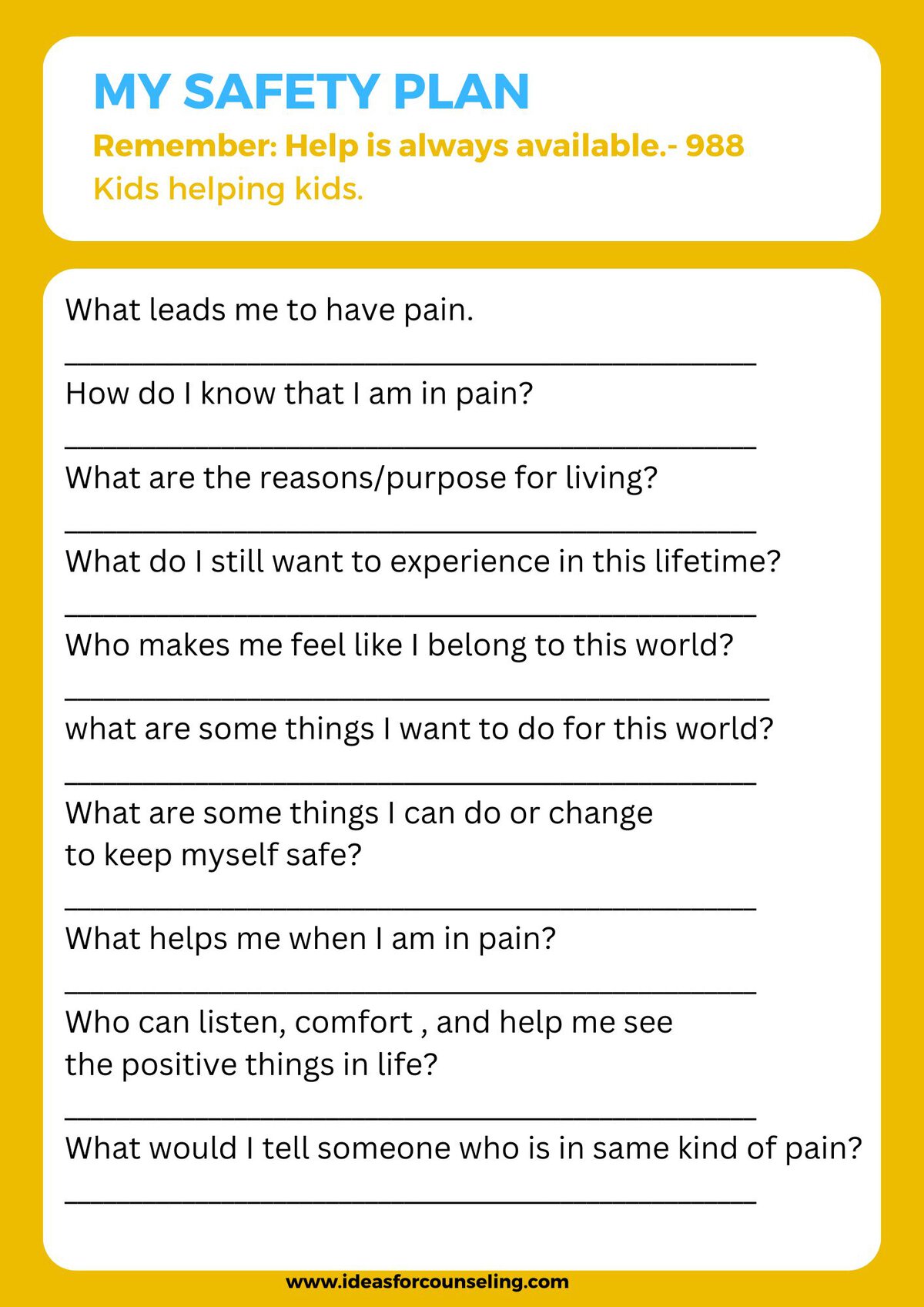
When creating a safety plan, I often share the example below, which was developed by one of my former clients and shared with her permission. She felt that traditional safety plans sounded too formal and clinical. Instead, she wanted a plan that felt personal and easy to use during difficult moments. Rather than using terms like triggers, warning signs, coping strategies, distractions, or professionals, she chose simple, everyday language. For example, she wrote about emotional pain, what it feels like, and how she gets through it.
I have found that clients engage more with a safety plan when they can relate to it. Seeing an example created by someone who has experienced similar struggles often makes the process feel less intimidating and more meaningful. As a result, clients are more likely to personalize their own safety plan and use it when they need it most.