
COMMUNICATION
Communication skills are one of the most common topics in therapy. Many psychoeducation handouts focus on improving communication. These are some of my favorites.
When clients want change, they often need new communication skills. They need to learn how to:
- Become more assertive
- Express their feelings
- Set healthy boundaries
- Stand up for themselves
- Improve their relationships
Teaching communication skills happens often in therapy. The more clients practice these skills during sessions, the easier they will use it outside therapy.
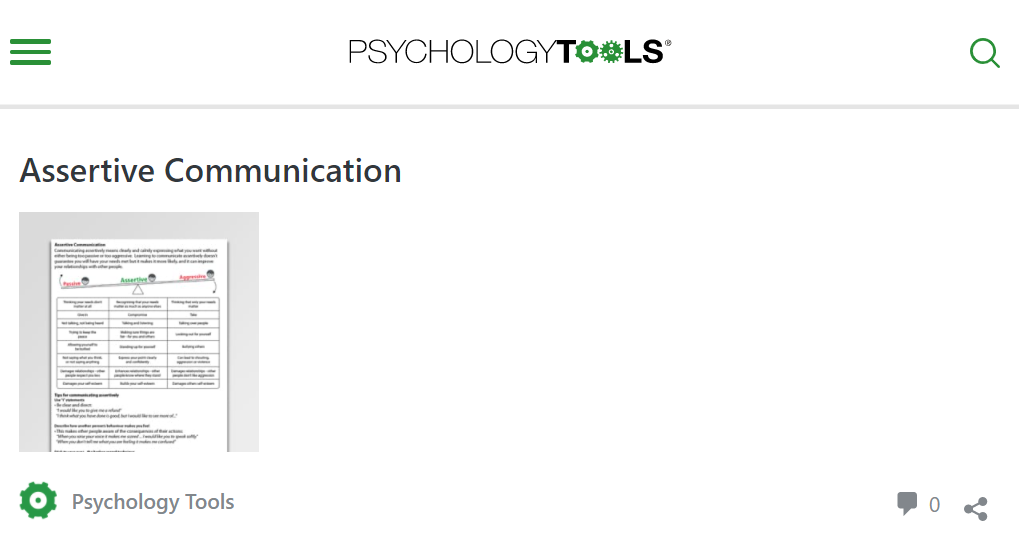
- Types of Communication Via Psychology Tools: The different types of passive, assertive, and aggressive communication. https://www.psychologytools.com/resource/assertive-communication/
- I statement and assertive communication from therapist aid: It teaches how you can use assertive communication. https://www.therapistaid.com/tools/communication/none
SELF ESTEEM
Self-Esteem
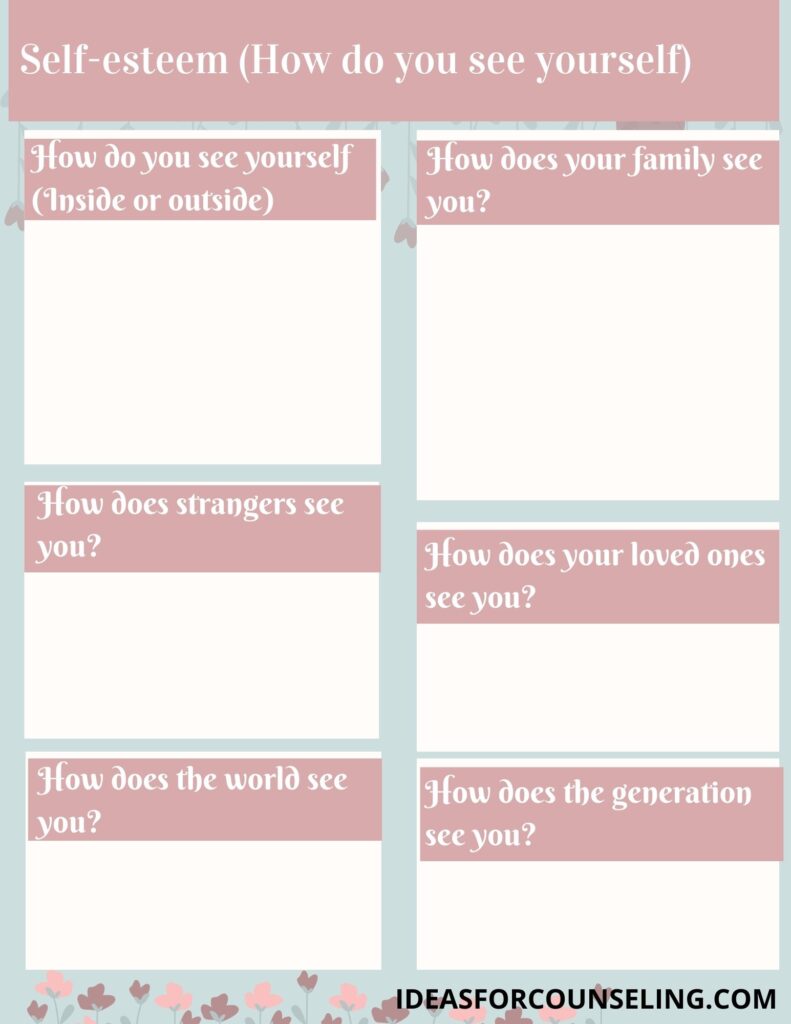
Self-esteem is one of my favorite topics to explore with clients. When clients practice self-compassion, they often feel more relaxed. They become more accepting of themselves. They also learn to handle difficult situations more effectively. I use two worksheets focused on self-esteem. The first worksheet explores what affects how clients see themselves. The second worksheet focuses on developing self-compassion.

Exploring How Clients See Themselves
How do you see yourself? (Inside and outside)
I love exploring how we judge ourselves. Many people are harder on themselves than others are. We discuss the difference between inner and outer qualities.
Inner qualities include:
- Kindness
- Compassion
- Love
- Hard work
Outer qualities include:
- Appearance
- Weight
- Skin color
The inner critic can become very powerful. Sometimes, words from others become our own inner voice. The outer critic may start the message, but the inner critic repeats it.
How does your family see you?
This question creates meaningful conversations. Clients can explore their unique qualities through family history, genetics, and experiences. It can be powerful when clients recognize something. The way their parents saw them as children may influence how they see themselves today. Their parents’ words may become part of their inner world.
How do strangers see you?
This question helps explore cognitive distortions. Clients can practice challenging assumptions.
We can ask:
- Can we really know what strangers think?
- Are we reading their minds?
- Will this matter in one week?
- Will it matter in five years?
What do your loved ones see in you?
This conversation can be powerful for many clients. Loved ones usually value people for who they are. They appreciate strengths and accept weaknesses. Relationships are built through connection. They are not built only through appearance or achievements.
How do peers and society influence your self-image?
This opens conversations about social expectations. I often explore trends from different generations. We look at clothing, hairstyles, and celebrities. Clients can see how ideas of beauty change over time.
We also discuss:
- Cliques
- Bullying
- Racism
- Sexism
- Discrimination
We explore who decides what is considered “beautiful.”
How does social media and pop culture affect self-image?
This topic connects with the previous discussion. Social media and pop culture strongly influence how people view themselves. We explore messages clients receive every day. We also discuss whether those messages are realistic or helpful.
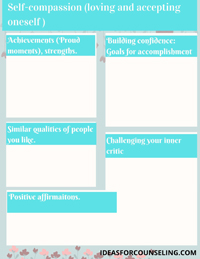
Self-Compassion
After exploring self-esteem, I introduce self-compassion.
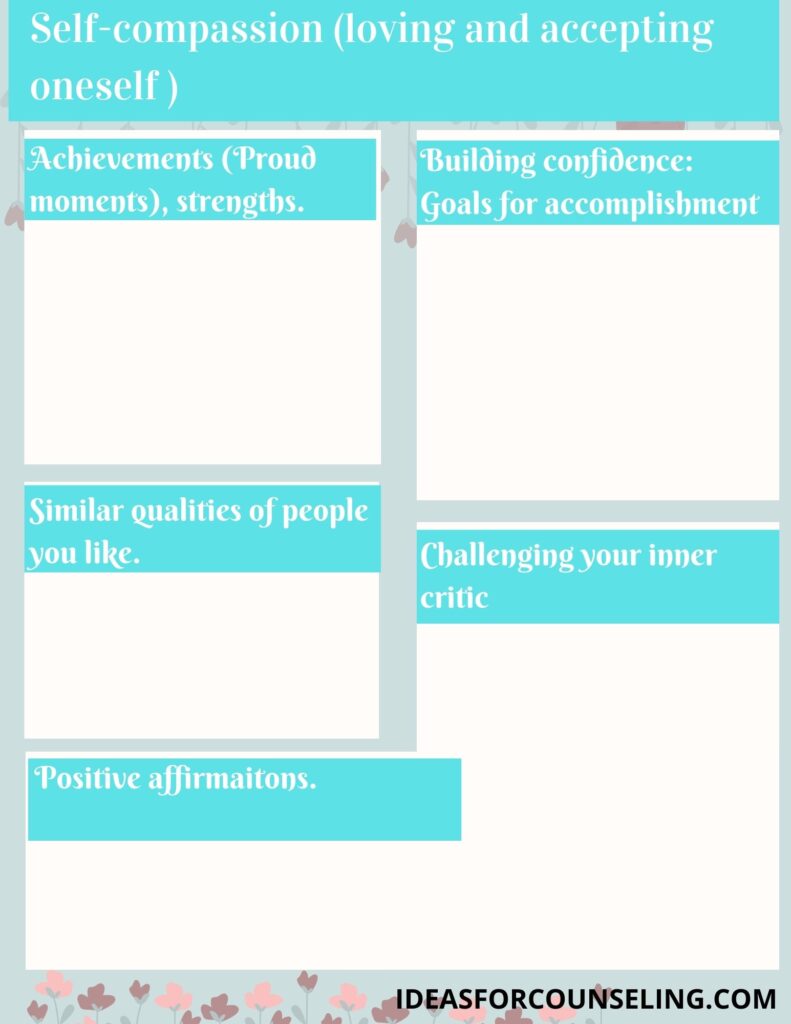
This worksheet focuses on self-respect, acceptance, and self-love.
Challenging the Inner Critic
The first step is observation. Clients identify their negative thoughts. Next, they learn to acknowledge these thoughts.
Then, they practice:
- Reframing the thought
- Challenging the thought
- Changing the thought
Sometimes, clients can also practice accepting their imperfections.
Recognizing Similar Qualities in Others
People often recognize positive qualities in others more easily.
We admire people who are:
- Kind
- Loving
- Supportive
- Genuine
However, we often ignore these qualities in ourselves. Clients can practice recognizing their own positive qualities. They can learn to treat themselves with the same kindness they offer others.
Recognizing Achievements and Proud Moments
Clients often believe they must be perfect. This discussion helps challenge that belief. Everyone has strengths and weaknesses. We also explore the difference between pride and boasting.
Pride means respecting yourself and feeling satisfied with your growth.
Boasting means trying to prove your value to others.
Building Confidence Through Achievable Goals
Self-criticism can become a motivation for growth. Clients can create healthy goals related to:
- Relationships
- Healthy habits
- Thoughts
- Actions
Self-love helps clients support themselves while they grow.
Positive Affirmations
Positive affirmations can improve inner dialogue. The way we speak to ourselves affects our mindset. Encouraging words can build self-respect. They can also remind clients to be kinder to themselves during difficult moments.
Cognitive Distortions and Restructuring


