
Acceptance and Commitment therapy (ACT)
Acceptance and Commitment therapy (ACT) is also one of the other therapy I would recommend taking it. I would say this is the one I try to practice myself in day to day life.
Yearning of Acceptance and Commitment Therapy (ACT)
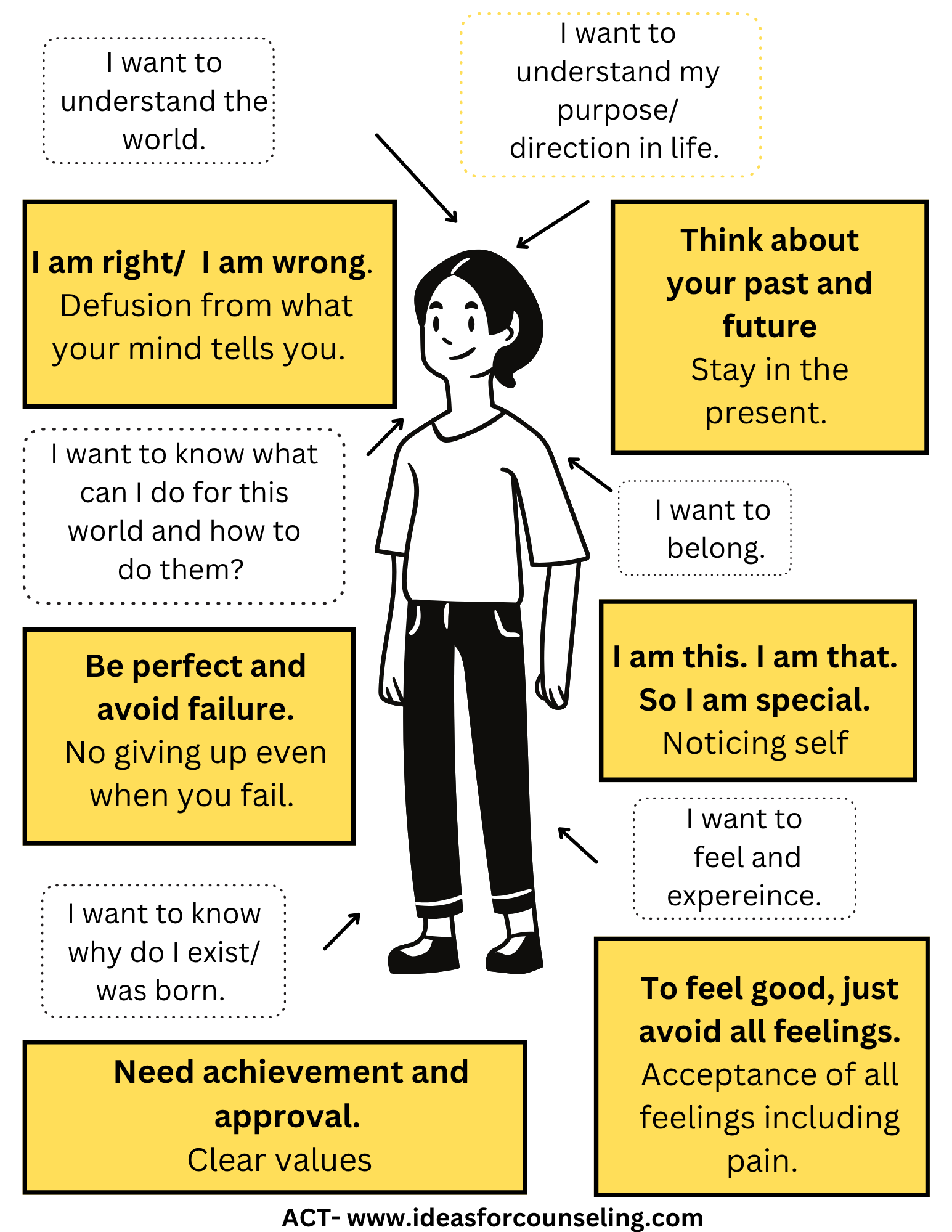
It has six yearning. It is very relatable when you are trying to make sense of your patient’s life and what they are struggling with and where they are stuck on?
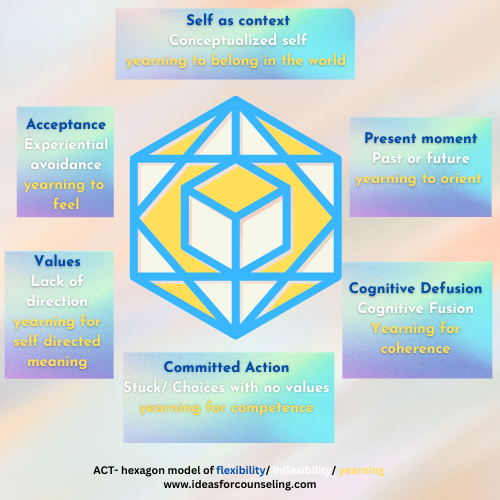

Psychological Inflexibility
Once they identify what yearning they are looking for in the life. It becomes easier to use the techniques from ACT to learn to be more flexible.
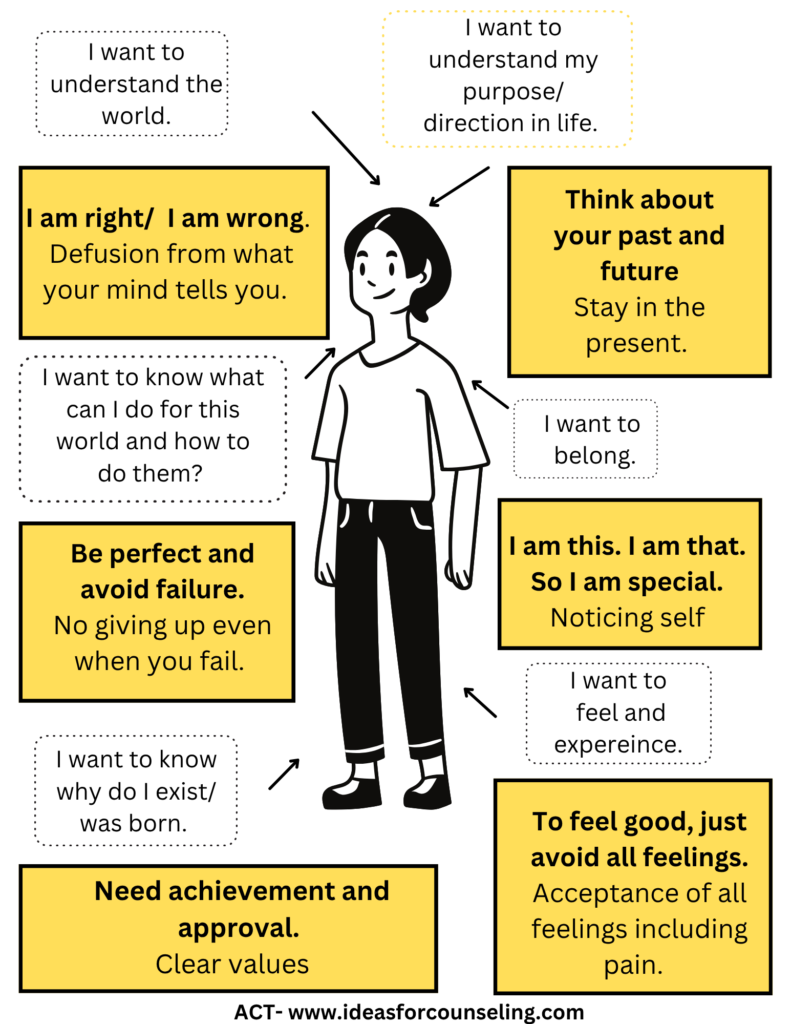
If they are having difficulties with not know what they are earning for. You can always go back to triggers to see where it fits into these psychological inflexibility.
Trigger activity link:
Locus of Control
Acceptance and Commitment Therapy (ACT) Practice exercises
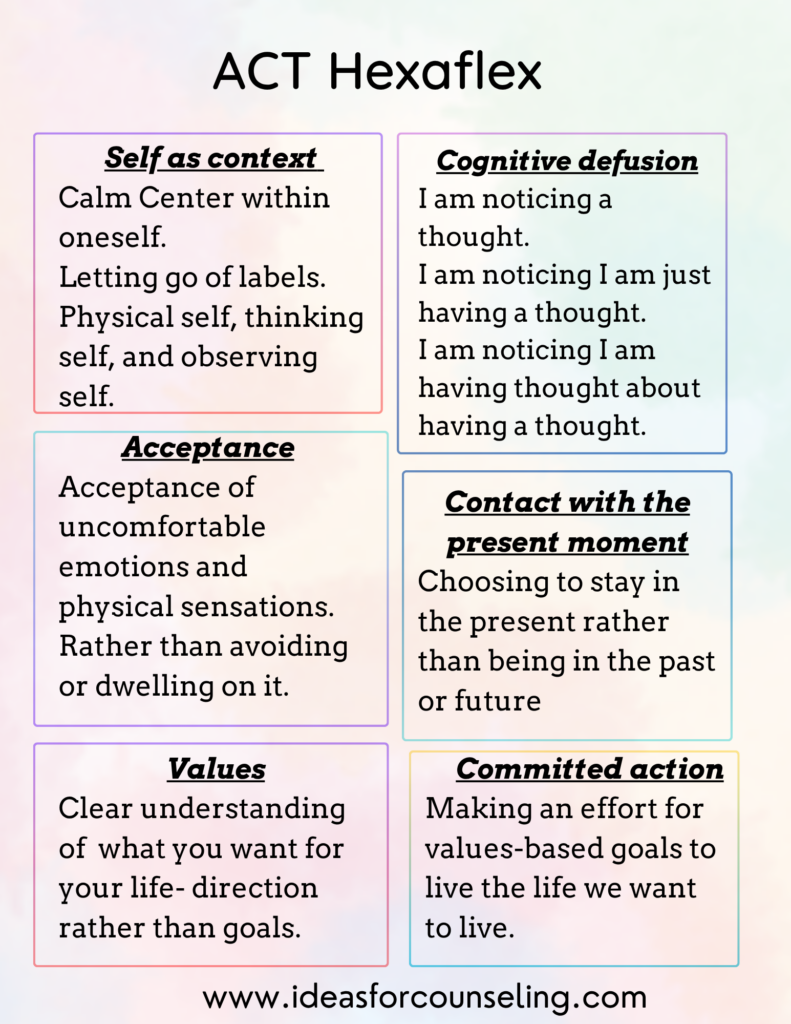
Once they get a better understanding of their psychological inflexibility. They are more likely to be willing to practice the mindfulness and acceptance strategies to change the way they think, feel and act. They are also more likely to be in touch with their values and make commitment to make a change.
If you want to learn more about practicing mindfulness, you can learn from this link. https://ideasforcounseling.com/mindfulness/
Philosophy to questions
Since Acceptance and Commitment therapy is very philosophical in nature, i would say it will be mostly you doing the work of helping them make sense of their life through questioning.
- what is the trigger?
- what are the thoughts?
- what are the feelings?
- what are the physical sensations?
- how do i see myself from this situation?
- what memories are attached to it from the past?
- what worries about the future is attached to this?
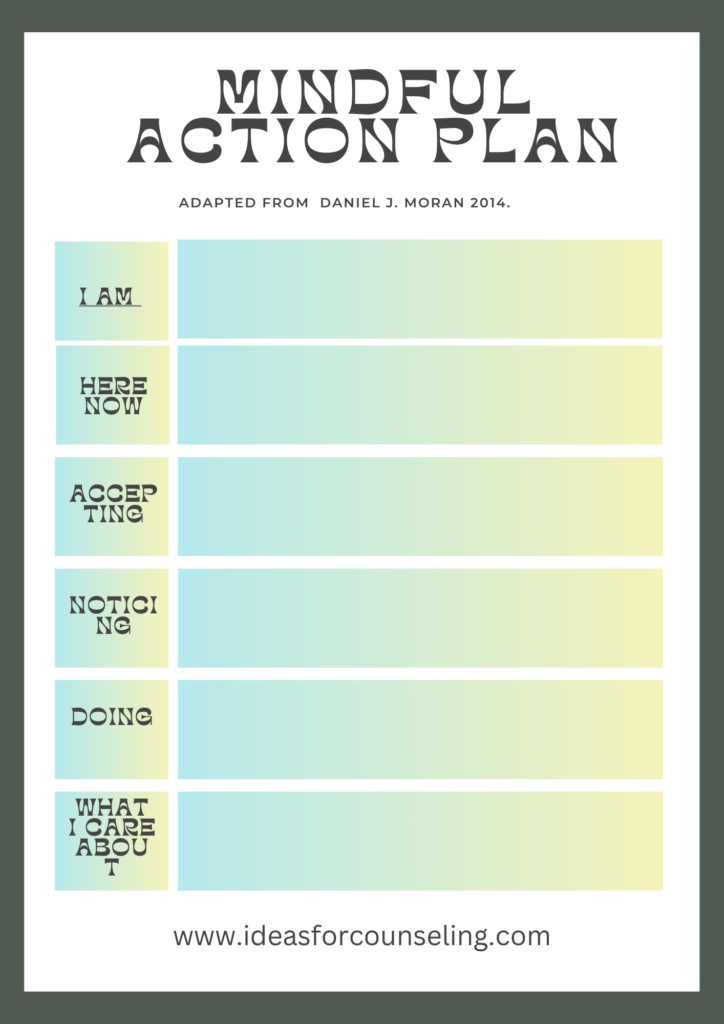
Mindful action plan by Daniel J. Moran
Once they are able to see the connection, then you can have use the mindful action plan created by Daniel J. Moran. They are noticing their thoughts about themselves, noticing the present moment without judgement, accepting the thoughts, feelings, and physical sensations that comes with it. And they choose an action that aligns with their values.
https://contextualscience.org/sites/default/files/49%20FriAM%20-%20Batten%20and%20Moran-%20XXXX.pdf

Websites with free resources:
- Steven Hayes website has videos and some tools that is free and easy to use. https://stevenchayes.com/tools/
- Russ Harris created this worksheets and handouts from ACT books. One is from 2014, and another one is from 2016. https://www.actmindfully.com.au/upimages/2016_Complete_Worksheets_for_Russ_Harris_ACT_Books.pdf https://thehappinesstrap.com/upimages/Complete_Worksheets_2014.pdf
- Therapist aid also has worksheets and tools that you can use in your counseling sessions. https://www.therapistaid.com/therapy-worksheet/becoming-psychologically-flexible
- John and Jamie Forsyth also has a pdf with forms and exercise and worksheets on ACT. https://contextualscience.org/sites/default/files/Forms_HO_ACT%202-Day%20ACBS%20Seattle%20June%202016%20copy.pdf
- Psychology Today also has tons of worksheet on ACT.https://positivepsychology.com/act-worksheets/
- My favorite has to be this one by Jacob Martinez. This makes me think of how I use my spiritual beliefs of Hinduism to apply in the way I live. It gives you ideas of how to use ACT with each and every type of clients and how to use it. https://www.theactmatrix.com/


