
COMMUNICATION
There are tons of psychoeducation handouts for communication skills out there. Here are some of my favorite ones. When we want our clients to change, we want them to learn to be assertive, stand up for themselves, put boundaries, express themselves and most importantly improve their connection with others. And to help them achieve these things, you will find yourself teaching communication skills again and again. And the more they practice these skills in the session, the more they are going to be able to use it outside of the session.
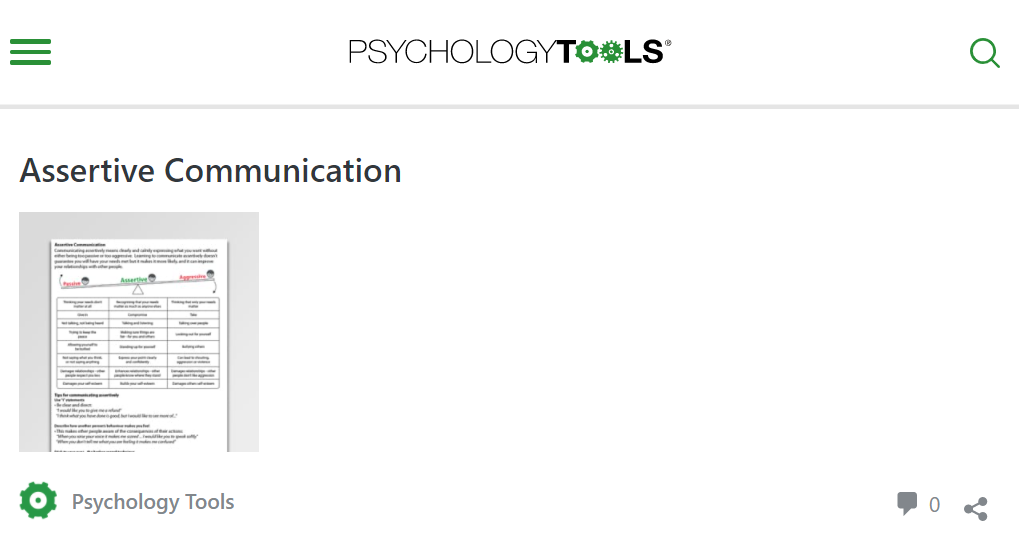
- Types of Communication Via Psychology Tools: The different types of passive, assertive, and aggressive communication. https://www.psychologytools.com/resource/assertive-communication/
- I statement and assertive communication from therapist aid: It teaches how you can use assertive communication. https://www.therapistaid.com/tools/communication/none
SELF ESTEEM
As for self-esteem, this is my favorite part. If clients learn to be self compassionate to themselves, they will be more relaxed, be content with themselves are better able to handle the situations. I have two worksheets focused on self-esteem.
1st worksheet focuses on exploring what affects the way they see themselves. 2nd one focuses on self compassion.
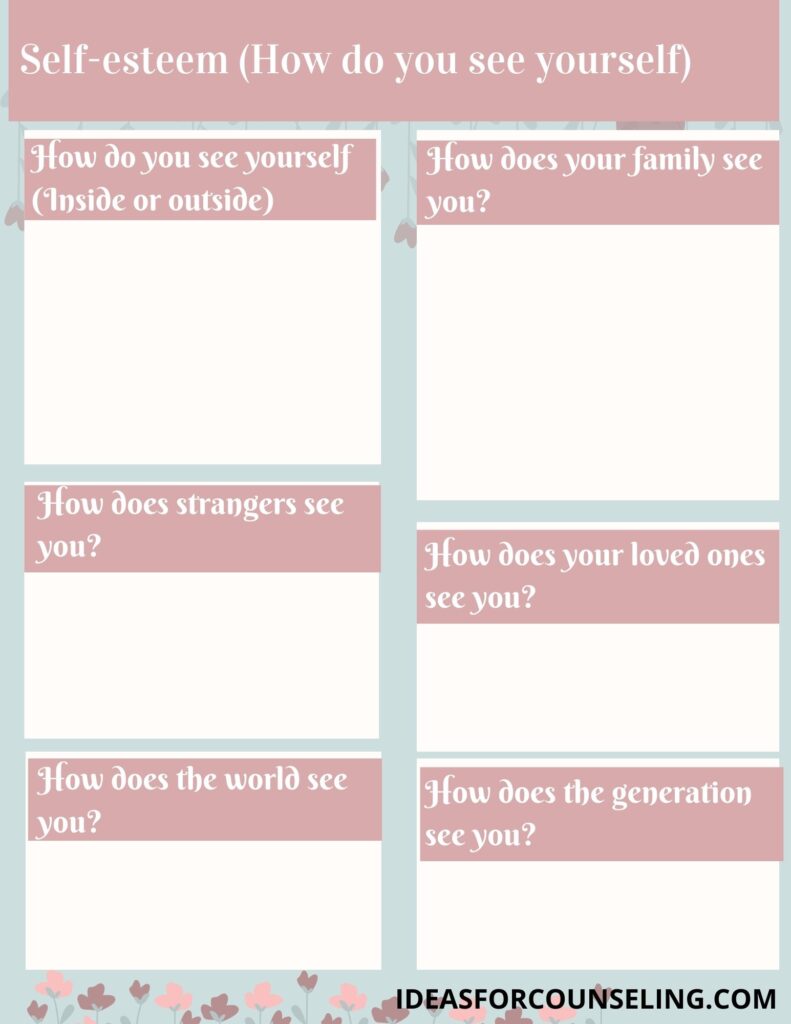

- How do you see yourself (Inside or outside)? I love talking about how we live in a world where we are probably more judgmental to ourselves than others are to us. I also discuss differences between inside qualities and emphasize societal factors (kind, compassionate, loving, hardworking), and outside (beautiful, skinny, skin color). The inner critic is so much more alive and recurring than the outer critic. The words might start with the outer critic, but the inner critic just plays the words over and over again.
- How does your family see you? : This can be a good time to talk about how the patient has unique physical features because of family history, genes, and origins. It can be very powerful sometimes for clients to see that how their parents saw them as a child might be the same way they are seeing themselves. The words their parents spoke becomes their inner world.
- How do strangers see you when they look at you? This can bring up conversation and revision about cognitive distortions and restructuring. Can we read these strangers’ minds? Is it really going to matter in a week, days, 5 months, or 5 years?
Cognitive Distortions and Restructuring
- What do you think your loved ones see you (partner, friends, and family that care about you)? This topic really opens up the eyes of the kids. People truly love and care for you for who you are regardless of your strengths and weaknesses. The importance is the connection between two souls than how they look or act.
- How does your generation, school setting, peers, and bullies want you to see yourself? I start by googling and looking up the dress, hairstyles, and celebrities of different generations, and how things change over time. I also talk about how tt is easier to make cliques and groups and bully others who are not the same as the group or clique. This brings up a conversation about racism, sexism, discrimination, and also who decides what is beauty.
- How does society, the world, social media, and pop culture want you to see yourself? This is similar to number 5, and similar kinds of conversations.
SELF COMPASSION
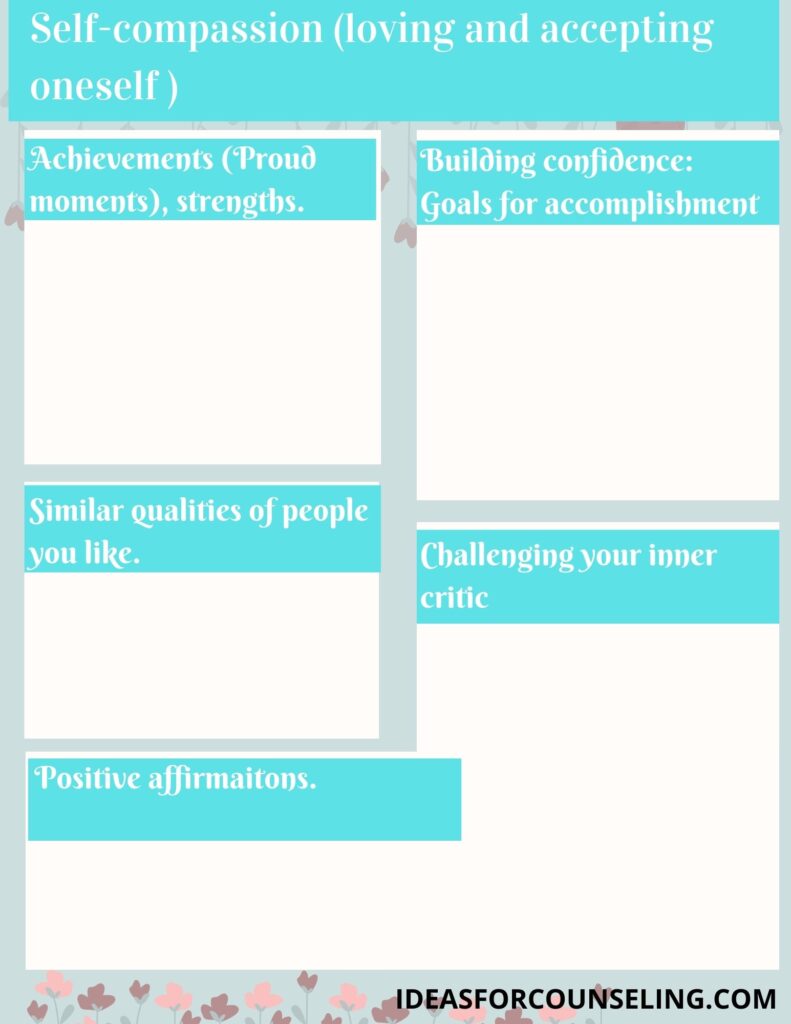
Once you explore the self esteem portion with your client, this worksheet can be focused on improving your self-respect and loving and accepting yourself.
- Challenging your inner critic: First thing comes the observation, and then comes acknowledging them and choosing to either reframe/ change/challenge it. There is always the other one where you can accept it as your weakness.
- Similar qualities of people who you like: We are always attracted to people who are kind, and loving, are able to achieve happiness with others and themselves, and love us for who we are. So, it becomes easier for people to recognize their loved one’s qualities than their own. We tend to be harsher on ourselves (only seeing the negative rather than the positive attitude or qualities). So, this can help an individual to find those inner human nature.
- Achievements or proud moments: Recognizing that there is no such thing as a perfect human being, and how each individual has different weaknesses and strengths. Sometimes, having a discussion about the difference between pride and boasting. Pride is a feeling of self-respect, being satisfied with one’s achievements, and boasting is glorifying oneself to others.
- Building confidence: Goals that can be accomplished: Self-criticism or weaknesses can be seen as a motivator to be healthier (healthier interaction with others, healthy living, healthy thinking, and healthy actions). Loving oneself to encourage and support oneself will be the key.
- Positive affirmations: To improve the way you are speaking to yourself (inner dialogue and mindset) can really help improve self-respect. Encouraging oneself through words can really help the kids remember to use them when they need them