
If you are working with kids who are adopted, or are in foster care or kinship care, you should remember that you have an opportunity to be a very important person in their lives. Since there are so many layers and complexities to this, I will try my best to be organized and give tools that you can use.
Assess, Connect, and Support:
It is very important to know the background so that you can really provide a holistic treatment. Not every adoptive, foster or kinship parent will have answer to these, but some of the questions to think about are:
1. How did pregnancy look like? Were there concerns of alcohol/ drug use, domestic violence, living situations? Any trauma, abuse, medical history?
2. What led to the decision of biological parents giving up their right? If these kids want to have contact with them when they get older, is that even possible?
3. At what age did they come to reside with the adoptive caregivers they are living with right now? Were there multiple foster parents or transitions before living permanently with the current caregiver?
4. What was the intent of adoptive caregivers when they decided to bring this child to the family? You can rely back on this answer when you want caregivers make some parenting changes.
Having compassion for kids even with these common behaviors: Some cases, if there is trauma involved, it can be a very complex case. So, work on recognizing that some of the behaviors that these children have are unfortunately very common and needs a lot of nonjudgmental view from us if we want these kids to change their behavior. You can use the chart below to have the child/ parent track what happened, how did the parents react, and why did the child choose these behaviors and what can be done instead?


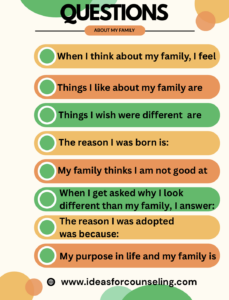
I also like to have family sessions and ask these questions to both the parent and child to be open with each other and communicate about adoption and how it impacts them and their family. These questions are very powerful to allow the child to be able to express their opinions and also feel heard and seen by their caregivers.
Good luck with this journey. It can be challenging at times when these caregivers who are probably burn out themselves come to you for quick answers, and there is not any quick and easy fix to it. However, I hope you keep on trusting yourself and continue to give your best to these children who need a longlisting “if possible” supportive non judgmental person.
